In this guide
When you drop your toddler at creche or a toddler programme in Lekki, what should their day actually look like? Quality infant care goes far beyond simply supervising children. A well-designed programme provides purposeful activities that support development across every domain – physical, cognitive, social, emotional, and linguistic. Here is what to expect from a good creche or toddler programme.
Sensory Play
Toddlers learn through their senses. A quality programme includes daily opportunities for sensory exploration:
- Tactile activities: Playing with sand, water, playdough, rice, beans, or finger paints.
- Auditory experiences: Listening to music, shaking rattles, banging drums, and exploring sounds.
- Visual stimulation: High-contrast pictures, mobiles, light tables, and colourful objects.
- Olfactory and taste: Exploring safe, edible materials and experiencing different smells during meal times.
Sensory play is not just fun – it builds neural connections, supports language development, and helps children regulate their emotions.
Gross Motor Activities
Toddlers need space and opportunity to move. A good programme provides:
- Climbing and balancing: Soft play equipment, low climbing frames, balance beams, and ramps.
- Running and jumping: Safe open spaces for running, jumping, hopping, and dancing.
- Ball play: Rolling, throwing, and catching age-appropriate balls.
- Outdoor time: Daily access to a safe outdoor play area with appropriate equipment.
Physical activity supports muscle development, coordination, and spatial awareness. It also helps toddlers sleep and eat better.
Fine Motor Activities
Developing small muscles in the hands and fingers prepares children for writing and self-care. Look for:
- Manipulative toys: Building blocks, stacking rings, shape sorters, and puzzles.
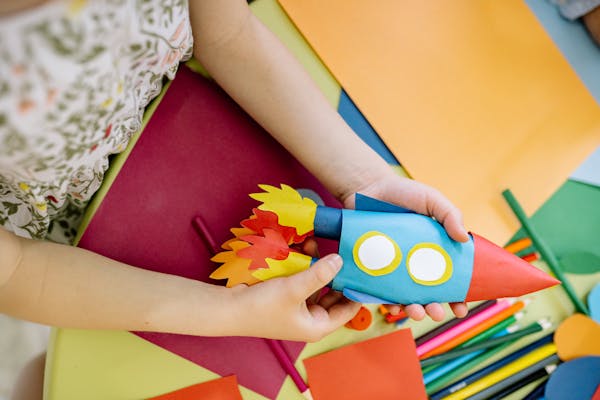
- Art activities: Crayons, chalk, stickers, and safe scissors.
- Practical life skills: Scooping, pouring, spooning, buttoning, and zipping.
- Threading and posting: Large beads, posting boxes, and threading toys.
Language and Communication
Language development is at its peak in the toddler years. A quality creche programme:
- Talks to children constantly: Narrating activities, describing objects, and engaging in back-and-forth conversation.
- Reads aloud daily: Board books, picture books, and simple stories are part of every day.
- Sings songs and rhymes: Nursery rhymes, action songs, and finger plays build vocabulary and phonological awareness.
- Encourages expression: Staff respond warmly to a child’s attempts at communication, whether through words, gestures, or sounds.
Social and Emotional Development
Toddlers are beginning to understand themselves as separate individuals and to navigate relationships with others. A good programme supports this by:
- Modelling gentle interactions: Staff demonstrate kindness, sharing, and turn-taking.
- Supporting emotional regulation: When a toddler is upset, staff comfort them, name the feeling, and help them calm down.
- Encouraging parallel and cooperative play: Arranging activities that allow children to play near each other and gradually learn to interact.
- Establishing predictable routines: Consistent daily schedules help toddlers feel secure and develop trust.
Creative Expression
Toddlers are naturally creative. Quality programmes encourage this through:
- Open-ended art: No colouring books or prescribed outcomes – just materials to explore freely.
- Music and movement: Dancing, shaking instruments, and moving to different rhythms.
- Pretend play: Simple props like toy telephones, baby dolls, kitchen items, and dress-up clothes.
What a Daily Schedule Might Look Like
A well-balanced toddler programme might follow a rhythm like this:
| Time | Activity |
|---|---|
| 8:00 – 8:30 | Arrival and free play |
| 8:30 – 9:00 | Morning circle – songs, greetings, and stories |
| 9:00 – 9:30 | Snack time |
| 9:30 – 10:15 | Outdoor play or gross motor activities |
| 10:15 – 10:45 | Sensory or art activity |
| 10:45 – 11:15 | Free play with fine motor and manipulative toys |
| 11:15 – 11:45 | Lunch |
| 11:45 – 2:00 | Nap or quiet rest time |
| 2:00 – 2:30 | Afternoon snack |
| 2:30 – 3:00 | Music, movement, or outdoor play |
| 3:00 – 3:30 | Story time and calm-down activities |
| 3:30 onwards | Pick-up and departure |
Red Flags to Watch For
Be concerned if a toddler programme:
- Keeps children in high chairs or confined spaces for long periods
- Has no outdoor play time
- Relies heavily on screens or tablets
- Cannot describe a daily routine or learning philosophy
- Has caregivers who seem disengaged or unresponsive to children’s needs
At Pleasant Places School, our toddler programme is designed to nurture each child’s natural curiosity and development. We invite you to visit our Lekki creche, observe a session, and see what purposeful, loving infant care looks like.
Continue reading
 Creche
 Activities for Toddlers at School – What Good Infant Care Looks Like
What should actually be happening in a good Port Harcourt creche or toddler programme? A guide to developmentally appropriate activities and environments for children under three.
 Lekki
Lekki When Should My Child Start Nursery School in Nigeria?
Signs of readiness, what age is typical in Nigeria, and how to make the first school transition as smooth as possible for your child. A guide for Lekki parents from Pleasant Places School.
 Admissions
 Schools Accepting New Pupils in Lagos: 2026 Enrolment Guide
PPS is open for 2026 enrolment across all four programmes. Here is everything you need to know to secure a place before the new term begins.
Lekki How to Prepare Your Child for Their First Day of School
Practical steps, honest reassurance, and a simple checklist for making the transition from home to school as smooth as possible for young children.